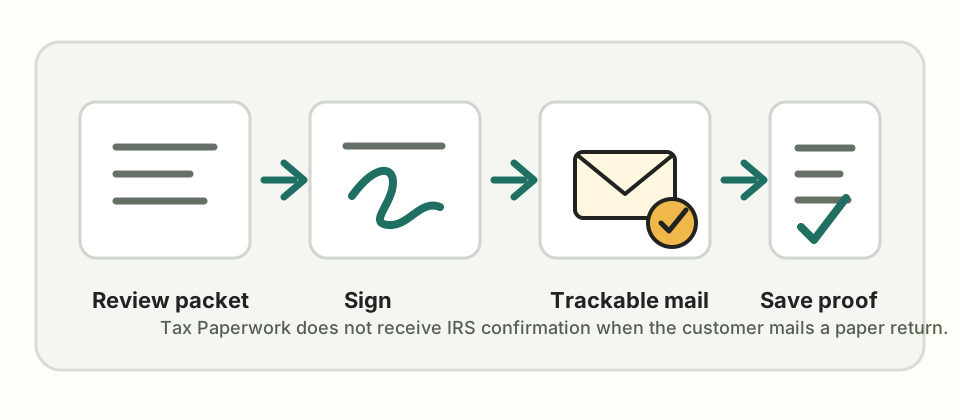
Before sealing the envelope
- Print the final Form 709 and all required attachments.
- Review names, addresses, gift dates, values, and signature areas before any official use outside Tax Paperwork.
- Sign and date the return where required.
- Keep a complete copy of exactly what you mail.
If using USPS
Consider a service that gives evidence you mailed the packet and a way to track delivery. USPS describes Certified Mail as providing a mailing receipt and tracking history, and Return Receipt as proof of delivery with recipient signature information.
If using a private delivery service
The IRS accepts only designated DHL, FedEx, and UPS services for the timely mailing rule. Use the IRS PDS street address rather than a P.O. box, and keep the carrier's written proof of mailing date.
What to save
- Signed copy of the return and attachments.
- USPS Certified Mail receipt, Certificate of Mailing, tracking receipt, or PDS receipt.
- Return Receipt, electronic Return Receipt, Proof of Delivery, or tracking delivery page when available.
- Any IRS notice or correspondence received later.
Consider professional review
Mailing proof is procedural. Late filings, rejected mail, disputed delivery, tax due, GST issues, or uncertain attachments can need CPA, EA, or attorney review. Tax Paperwork does not match users with professionals.
Use proof outside the public preview
If you decide to file after independent review, treat the return as incomplete until you sign it, mail it through a trackable method, and save proof with your records.